Why Your Front Door Material Matters
Your entrance door is the first thing visitors see and the last line of defence between your home and the outside world. Choosing the right material affects security, energy efficiency, kerb appeal and long-term maintenance costs.
The two most popular options for premium residential entrance doors in the UK are steel and composite. Both offer advantages over traditional timber, but they differ significantly in key areas.
Security
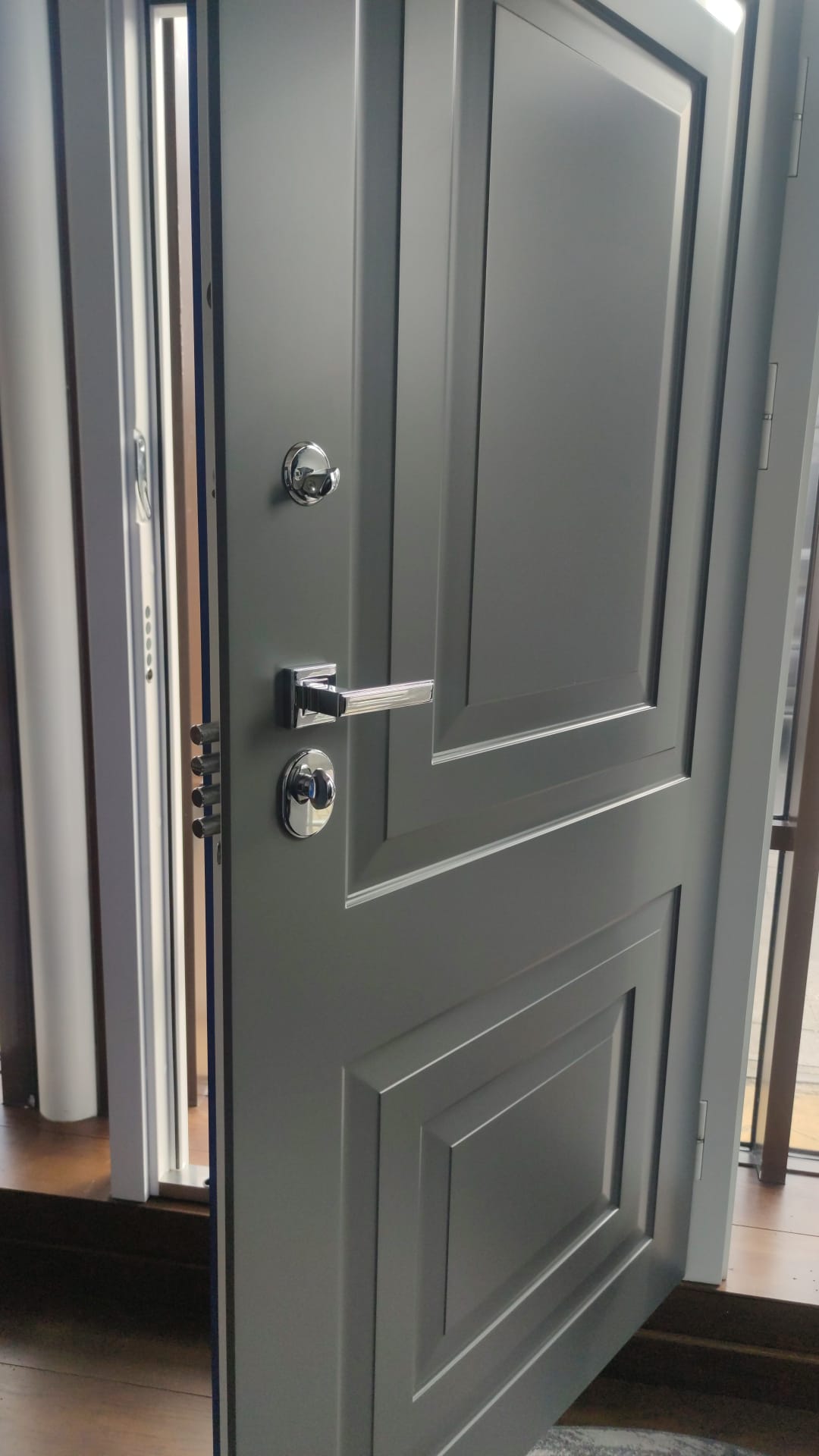
Steel doors are the clear winner for security. A steel entrance door can achieve SR3 security ratings under BS EN 1627:2011 — the highest level of physical security testing available for residential doors. SR3-rated doors withstand sustained forced attack using heavy-duty tools including crowbars, drills and angle grinders.
Composite doors typically achieve PAS 24 certification, which tests resistance to manual attack for a shorter period with lighter tools. While PAS 24 is a respectable standard and meets building regulations, it is several levels below SR3 in terms of attack resistance.
For homeowners with high-value properties or those in areas with higher burglary risk, the difference is significant.
Durability and Maintenance
Steel doors are manufactured from fire-rated steel and finished with multi-layer paint systems. They do not warp, crack, fade or swell with temperature changes. A well-manufactured steel door will maintain its appearance and performance for decades with minimal maintenance.
Composite doors combine a timber or foam core with a GRP (glass-reinforced plastic) skin. While they resist warping better than solid timber, the GRP skin can fade in direct sunlight over time, and the foam core can degrade in extreme conditions. Cheaper composite doors may also develop issues with their locking mechanisms as the core material settles.
Design Flexibility
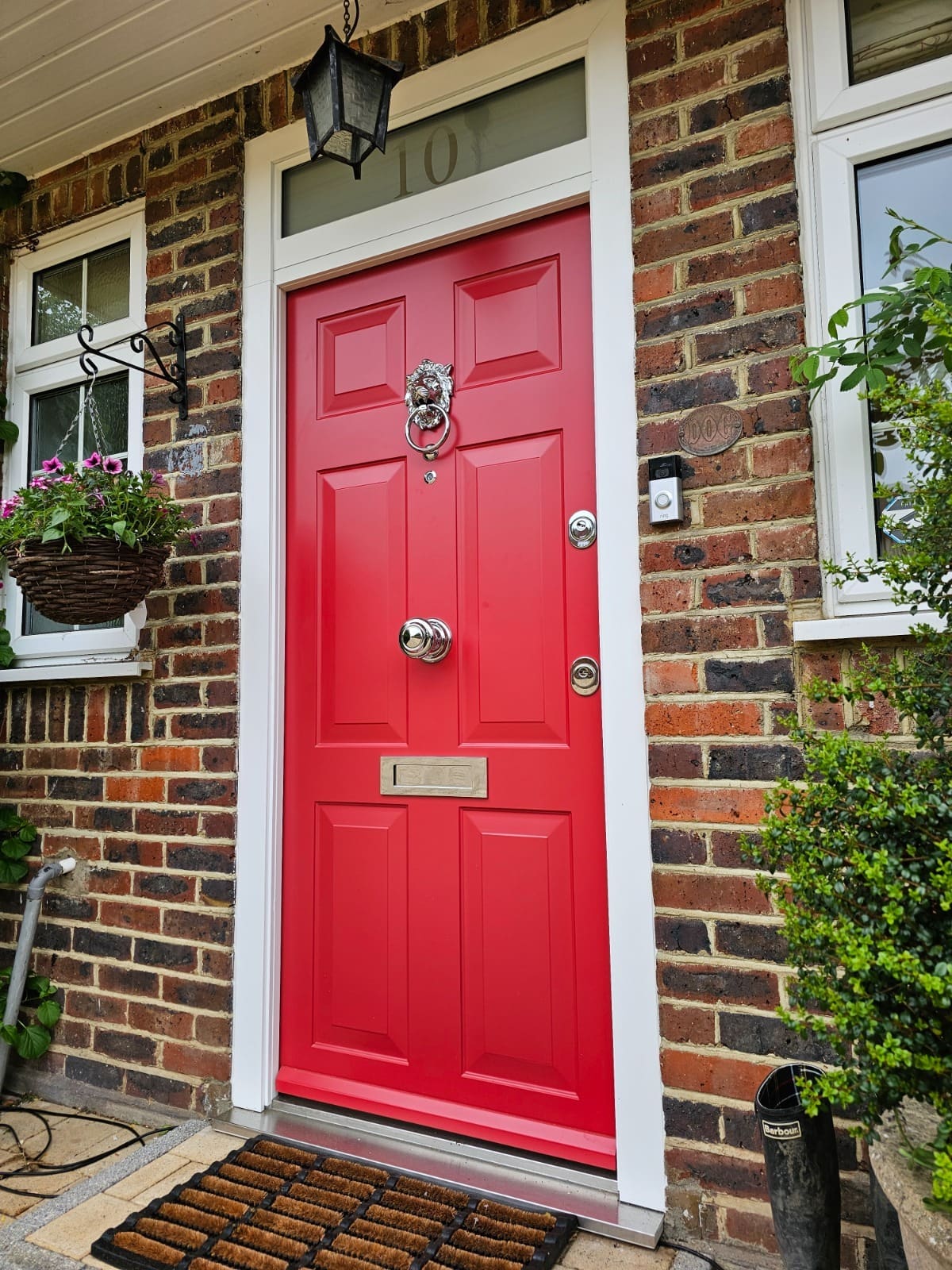
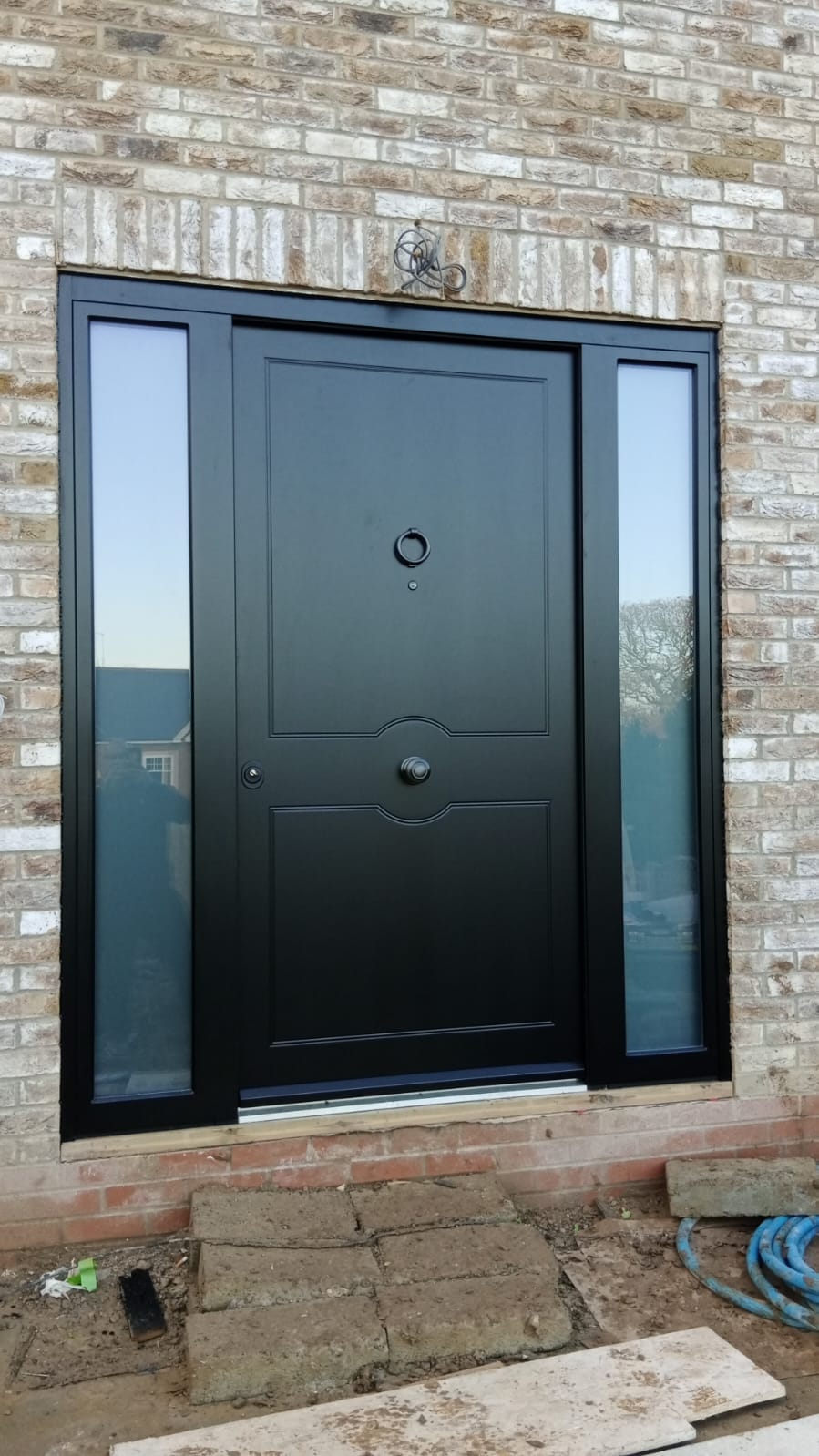
Steel doors offer virtually unlimited customisation. Because they are made to order, you can specify any RAL colour (over 200 options), dual-colour finishes (different colours inside and outside), bespoke panel designs, decorative glazing, period-appropriate hardware and custom dimensions. There are no standard sizes.
Composite doors are typically available in a range of pre-designed styles with a selection of colour options. While the range has improved in recent years, the designs are standardised and the level of customisation is limited compared to a fully bespoke steel door.
Thermal Performance
Both materials perform well for thermal efficiency. Steel doors with a polyurethane-injected core and thermal break technology achieve excellent U-values. Composite doors with a solid foam core also provide good insulation. In practice, the difference between the two is marginal, and both will significantly outperform an old timber door.
Cost
Composite doors are the more affordable option, with prices typically ranging from £800 to £2,500 for a standard installation.
Steel entrance doors are a premium product. Bespoke steel doors start from a higher price point, reflecting the SR3 security rating, ISO 9001 certified manufacturing, bespoke design process and professional installation. For homeowners who prioritise the highest security standards and complete design freedom, the investment reflects the quality.
Head-to-Head Comparison
Here is how steel and composite doors compare across every key factor:
Security Rating - **Steel:** SR3 (BS EN 1627) — resists sustained attack with heavy tools for 20+ minutes - **Composite:** PAS 24 — resists manual attack with light tools for 3 minutes - **Winner: Steel** — several levels higher physical security
Thermal Performance (U-value) - **Steel:** 0.87–1.2 W/m²K (with thermal break and polyurethane core) - **Composite:** 0.9–1.4 W/m²K (solid foam core) - **Winner: Draw** — both significantly outperform timber (3.0+ W/m²K)
Lifespan - **Steel:** 40–50+ years with minimal maintenance - **Composite:** 15–25 years before GRP skin degradation - **Winner: Steel** — substantially longer working life
Customisation - **Steel:** Any RAL colour (200+), dual-colour, bespoke panels, any size, any hardware - **Composite:** 15–30 standard colours, fixed panel designs, limited sizes - **Winner: Steel** — completely bespoke vs standardised options
Fire Rating - **Steel:** Inherently fire-rated steel construction (FD30/FD60 available) - **Composite:** Not fire rated without specialist construction - **Winner: Steel**
Weight - **Steel:** 80–120kg (requires structural survey and professional installation) - **Composite:** 35–55kg (lighter, easier to fit) - **Winner: Composite** — lighter and easier to handle
Price Range - **Steel:** £4,000–£15,000+ (bespoke, installed) - **Composite:** £800–£2,500 (standard, installed) - **Winner: Composite** — significantly lower entry price
Maintenance - **Steel:** Wipe clean, occasional hardware lubrication. No repainting needed. - **Composite:** Wipe clean, but GRP skin may fade and require replacement after 15–20 years. - **Winner: Steel** — truly maintenance-free long term
Which Should You Choose?
Choose a composite door if you want a solid upgrade from timber at a moderate price point, with good security and a range of styles. Composite is the right choice for most standard residential properties where budget is the primary concern.
Choose a steel entrance door if you want the highest possible security (SR3 rated), complete design freedom, UK manufacturing, professional installation and a door that will last for decades without compromise. Steel is the right choice for high-value properties, security-conscious homeowners, and anyone who wants a truly bespoke entrance.
For homeowners in [London](/areas/london), [Surrey](/areas/surrey), [Buckinghamshire](/areas/buckinghamshire) and across the UK, SteelR provides a complete service from [design consultation through to installation](/process). Every door is manufactured to [SR3 security standards](/blog/what-is-sr3-security-rating) and [Secured by Design approved](/security). [Browse our full collection](/collection) or [request a free consultation](/contact) to discuss your requirements.